
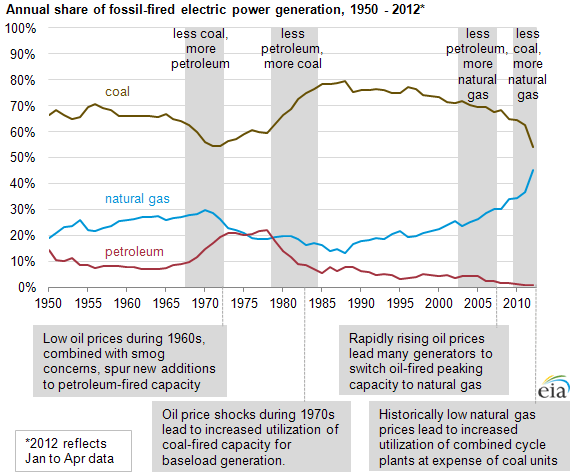
The mix of fuels used to generate electricity has varied over time. Several factors, especially changes in relative fossil fuel prices, have influenced the mix of energy sources used. EIA recently released a study on the competition between coal, natural gas, and petroleum used for electricity generation, which estimates what economists refer to as the elasticity of substitution among the fuels. The ‘elasticity of substitution’ concept measures how the use of these fuels varies as their relative prices change.
The structure of the power industry varies from region to region. Generation dispatch decisions are made by an individual utility operating multiple plants in its service area or by a Regional Transmission Organization as part of a centralized wholesale power market. In either case, generation costs are a primary driver determining the mix of fuels used to supply a region’s power load.
As fuel costs and technology change over time, some energy sources become more economical to use than others. Historically, coal and nuclear generation units supplied most of the baseload power demand in the United States partly because of their low fuel-related operating costs. Generation fueled by natural gas and petroleum supplemented the baseload generators during peak and intermediate periods of demand. In some areas of the country, abundant hydropower capacity has supplied both baseload and peaking generation. Fossil fuels—coal, natural gas, and petroleum—supplied 70% of total electric power generation in 1950, with that share rising to 82% in 1970, and falling back to 70% in 2010.
Categories: Energy
 Prometheus Institute