
Prolonged drought can affect power plants that rely on large volumes of fresh water for a variety of reasons. Though there have been few reported problems this year, lower water levels are a potential concern for grid operators and system planners during periods of extended drought.
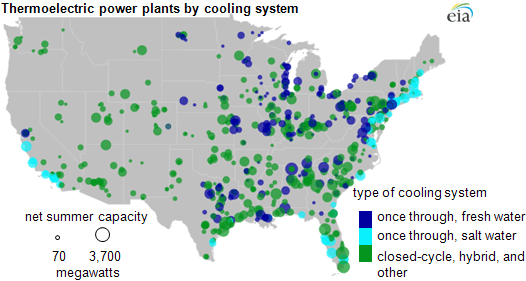
The map above shows the relative size of electric power plants, expressed in megawatts, for the subset of power plants that reported operating cooling systems, by type, that withdrew water for cooling during 2011 (the latest full summer season of data available).
Once-through, fresh water cooling systems are more likely to be affected by lower water levels in lakes, rivers, and streams that occur in sustained drought periods.
Once-through, salt water cooling systems withdraw and discharge from larger bodies of water (oceans, bays and sounds) which are slightly less likely to be affected by lower water levels in sustained drought periods, though they can be affected by temperature regulations.
Closed-cycle, hybrid and other systems either reuse water after withdraw or use very little water for cooling. Over half of the cooling systems at U.S. power plants re-use water through a cooling tower, though some of the larger plants in the nation have once-through systems from fresh water sources. Dry-air cooled systems use essentially no water for cooling purposes but are not in wide use at this time.
Categories: Electricity, Energy
 Prometheus Institute